

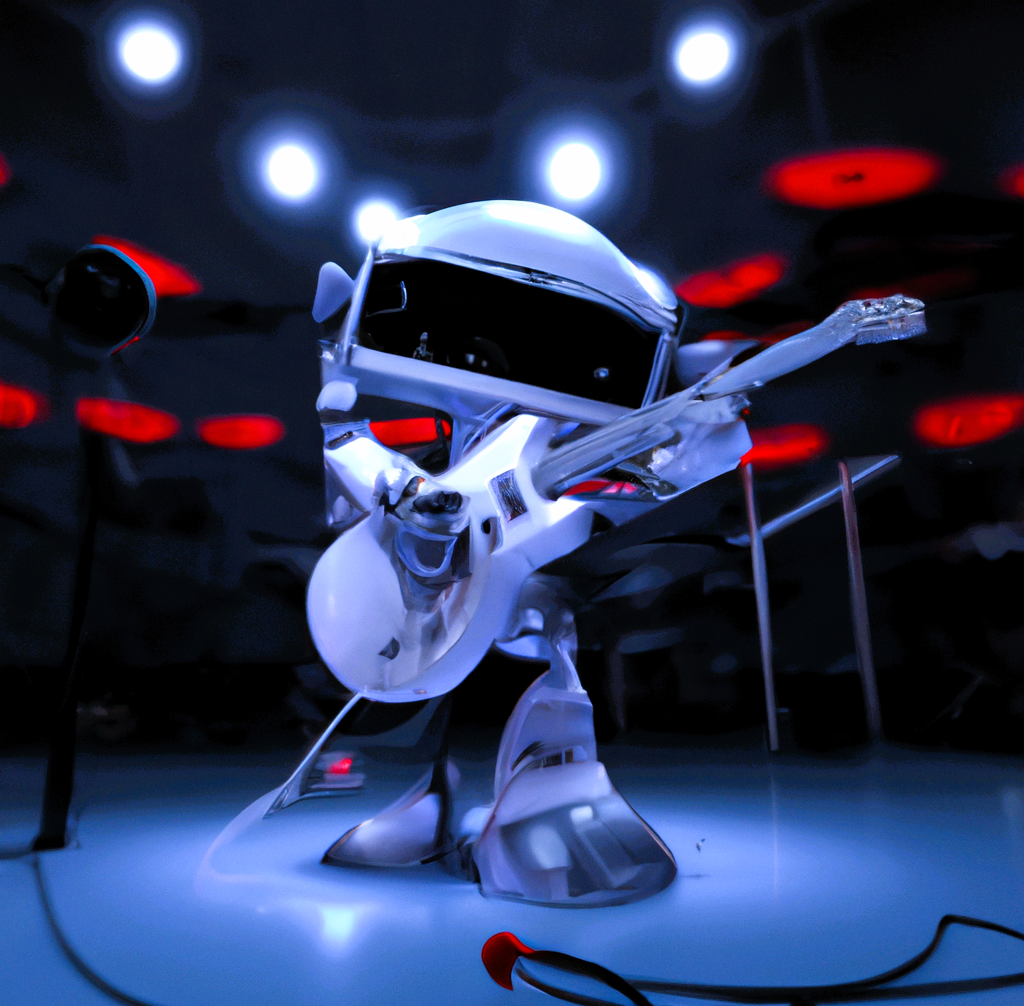
Act 1 vs. Act 2: From Garage Band to Stadium Tour
In Act 1, the AI industry was like a garage band—full of potential but still tinkering with sound and style. Predictions were like band members discussing their first big album. In Act 2, suddenly, the band is headlining stadiums. Last year’s estimates were like expecting to play local bars for another decade. Instead, we find ourselves rocking to Eleven Labs’ viral TikToks and Runway’s AI film festival in sold-out venues.
The High-Speed Turn
Why did this happen? The answer lies in the bottleneck of GPU supply. Think of GPUs as the must-have instrument that produces the band’s signature sound. As a band, you can’t play the stadium without it. High demand and low supply have now led to subscription models allowing fans—or in this case, users—to “skip the line.”
The Mirage of Vertical Separation: The Spin-off Series We Thought We’d Get
We foresaw neatly defined roles, like a blockbuster series with clear spin-offs. Application layer companies were the main plot, and foundation model providers the spin-offs. However, we got a complex cinematic universe, à la Marvel, where everyone is a bit of a superhero and a bit of a sidekick.
Credit: Sequoia Capital – Generative AI market Cap


Why No Spin-offs?
Why hasn’t this separation happened? Cutthroat competition and the need for speed to market have made it more efficient for companies to be vertically integrated. It’s like a series deciding not to risk a spin-off and instead putting all its best characters into one show to maximize viewer engagement.
The Financial Boom: It’s a Box Office Hit
The AI realm has become a box office sensation. In 2021 alone, over $1 billion was invested in AI start-ups.
In 2022, an estimated $5.3 Billions and in 2023 In the first six months of 2023, VC ploughed $15.2 billion into generative AI companies globally, according to Pitchbook data. (Even without the $10 billions Microsoft’s mega deal, the value of VC investments in generative AI was up by almost 58% compared to 2022)

Source: Pitchbook
From an “adoption box-office” angle, ChatGPT reached 100M MAU in just 6 weeks. For comparison, Instagram took 2.5 years, and YouTube 4 years to reach the same milestone.
What’s Selling the Tickets?
The magnetic appeal of new AI technologies—like Character AI’s 2-hour average session time and GitHub Copilot’s 55% increase in developer efficiency—is driving investment and usage. It’s like having a blockbuster every summer; the audience can’t get enough, and the box office numbers prove it.
Customer Moats and the Generational Shift: Building the Fanbase
Initially, data seemed like the ultimate fan base, a loyal audience that would keep coming back. In reality, the true fans are found in customer workflows and user networks. These are your ride-or-die fans—the ones who follow you on tour, not just stream your hits.
The Real VIPs
The spotlight shouldn’t be on how much data we’re amassing, but rather the quality of user engagement. Just like in the music industry, it’s not just about hit singles but building a body of work that creates a lifelong fan.
The Struggle of Scaling: The Sophomore Album Slump
The sophomore album is always tricky; there’s more scrutiny and less novelty. Companies like Midjourney and Character AI are experiencing their own sophomore slumps in user retention. In a packed market, where every company offers an AI tool, the challenge is not just in being big but continually being better.
Why Scaling is Hard
Just like a second album struggles to capture the magic of a debut, AI companies are not just competing against each other. They’re up against ever-evolving consumer expectations. One-hit wonders aren’t enough; they need to be consistently ground-breaking.
Ethical Quagmires and Copyright Chaos: The Plot Twists
In this blockbuster saga, ethical dilemmas and copyright wars are the plot twists we didn’t see coming. Japan claims AI-trained content has no IP rights, and Europe toys with heavy-handed regulation.
The New Arcs
Why is this important? Because now the industry is being asked ethical questions that extend beyond technology. These questions can shape public perception and ultimately dictate market viability.
Curtain Call: The Trilogy’s Conclusion?
As the curtains fall on Act 2, the world of generative AI is at a turning point. It’s like we’re waiting for the third instalment of a trilogy, knowing the choices made now will define the entire series.
Why the Third Act Matters
The choices made in this rapidly evolving arena will determine whether generative AI is a timeless classic or a forgotten fad. It’s more than the technology; it’s about how it fits into the broader narrative of society, business, and individual lives.
As Act 3 looms on the horizon, the industry stands at a critical juncture. The next act will reveal whether the fast-paced developments of Act 2 have set the stage for a grand finale or if the series will lose its lustre. Will you be a spectator, or will you be part of shaping the story?
The choice is yours.